Definition is not an explanation.
A definition is choosing the most accurate meaning of a problem, and then eliminating all other misunderstandings.
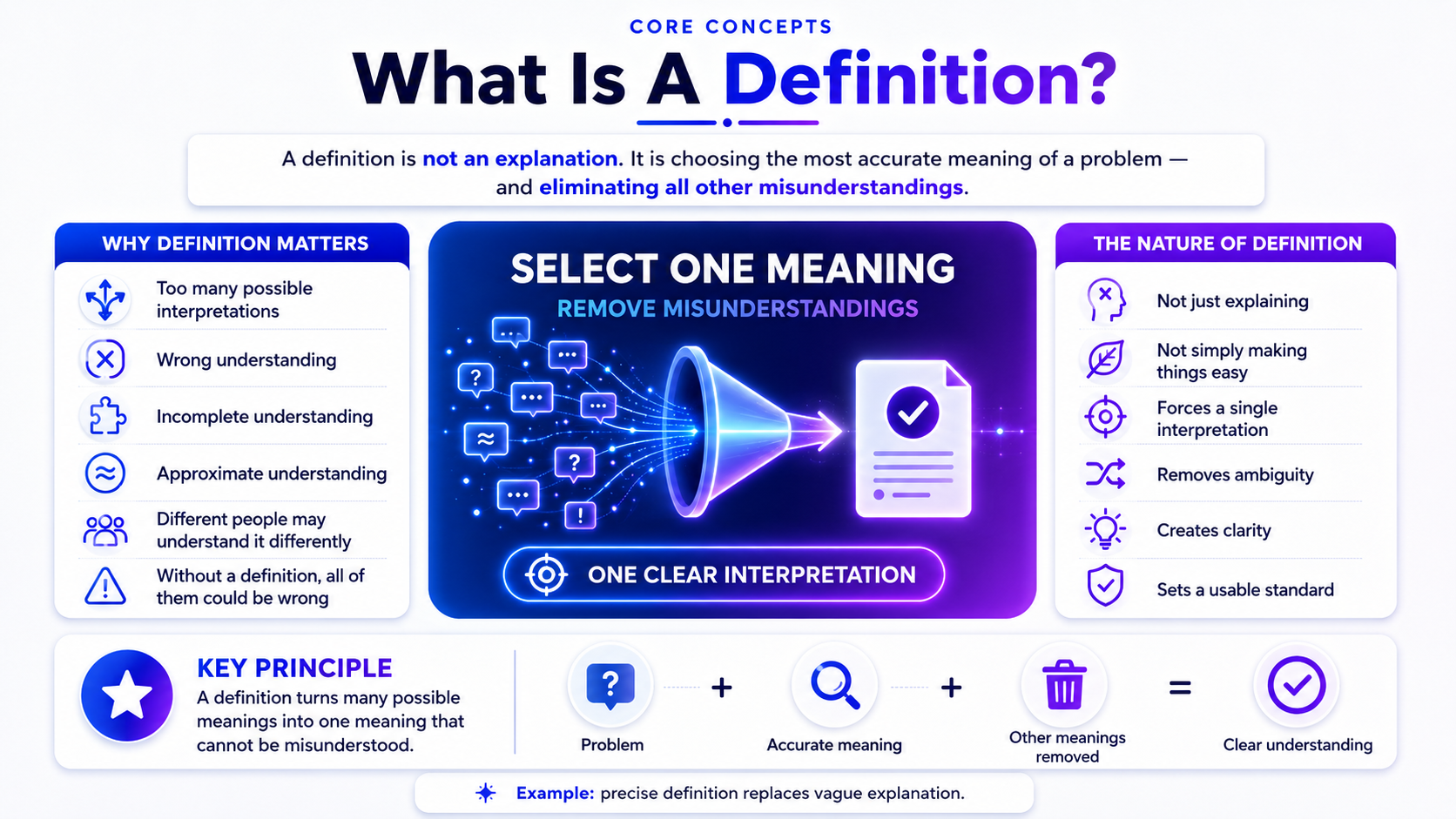
Definition is the process of selecting the most accurate meaning of a concept, then eliminating any misunderstandings – and expressing it in a way that cannot be misinterpreted.
Why Is a Definition Necessary?
Because a problem always has many interpretations:
- wrong understanding
- incomplete understanding
- approximate understanding.
👉 Without a definition: everyone will understand it differently—and all of them could be wrong.
The Nature of Definition
A definition is not about “making things easy to understand.”
👉 Instead, it’s: forcing a problem into a single, single interpretation.
Ex: What is SEO?
👉The precise definition of SEO:
SEO is the process of making Google believe that your website is the most relevant and trustworthy answer to a search query — so that Google will select and display it at the top of the search results.
How To Define a Problem
List all possible interpretations
👉 Identify all the “noise areas”.
Eliminate what is wrong or inappropriate
👉 Cut out misunderstandings.
Choose the most accurate meaning according to context
👉 Not just generally correct — but correct for the question being asked.
Remove unnecessary and easily misunderstood parts
👉 Read once → understand one meaning.
👉 Rephrase it so that it cannot be misinterpreted.
Standards of a Correct Definition
- No two interpretations
- No need for further explanation
- Others can repeat it without error.
👉 If further explanation is needed…that’s not a definition.
Ex: What SEO content actually is?
👉The precise definition of SEO content:
SEO content is not an SEO technique.
It’s about optimizing how people read and understand your content—to the point where they no longer need any other search results.
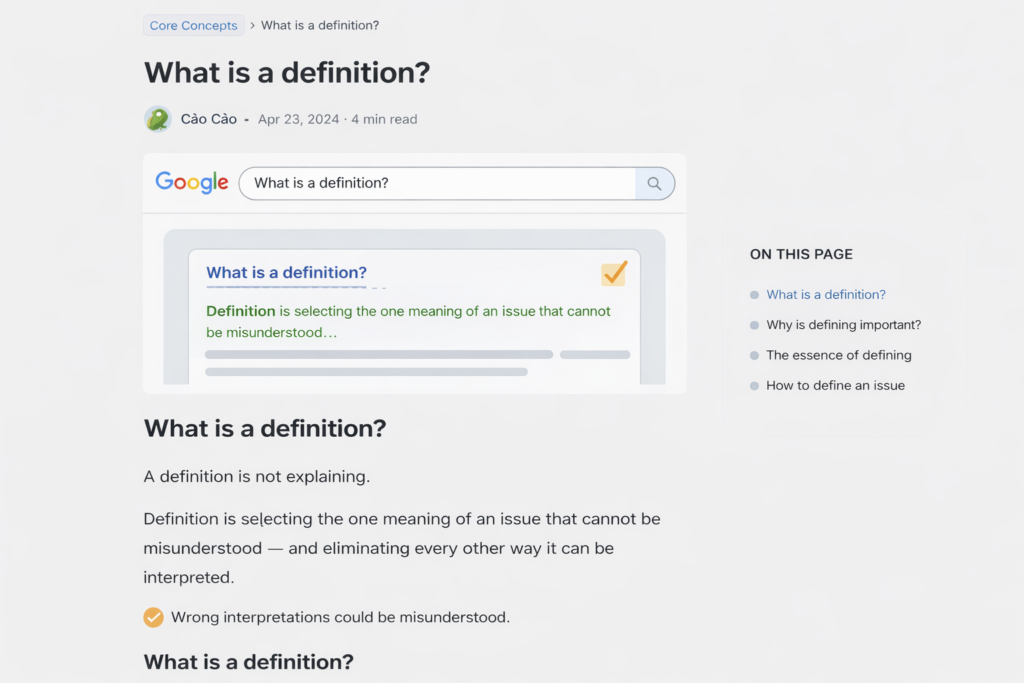
A definition is not explaining — it is selecting the one correct meaning and eliminating all misunderstandings
Common Mistakes When Defining
Using synonyms to explain
👉 “a definition is a solution…” “like…” “similar to the meaning…” → loop.
Keeping multiple interpretations for “safety”
👉 Result: everyone can understand it however they want.
Writing long to be “complete”
👉 The longer it is → the easier it is to get wrong.
What Does a Correct Definition Look Like?
- Clear
- Short
- Cannot be misunderstood.
Closing
Definition = choosing the most accurate meaning of a problem, then eliminating all misunderstandings — and expressing it in a way that cannot be misinterpreted.
If you read it and can still understand it in two different ways… then it’s not a definition.